How Much Protein You Need and

Pro Bodybuilders eat about one gram (sometimes even 1.5 grams) of protein per pound of body weight or per pound of non-fat tissue. I'm sure you've seen that the recommended dail

Comments

Friday, November 13, 2015

Training Triceps The Easy Way

Triceps and chest are trained on the same day because they assist each other during the range of motion . OK let me get straight to workouts

First get started with Close grip bench press , they are really helpful coz they are much easier than others . Lie on Bench and put very light weight at first and take a narrow grip than normal shoulder width , may be a hand or two space between your fists. Careful to balance it . Lift the bar as high as you can and then move slowly down towards chest , make sure that your elbows are just touching your trunk while declining the bar that will put pressure on your triceps other wise you will end up doing bench press for chest . :)

Lying Triceps Extention :
Triceps Pushdown : Secondly move to Triceps Pushdown. Push downs  can be done with rope or a triceps pushdown bar .Go with an over hand grip like when u ride a bike . Keep your elbows tucked to your side. Stand straight , take a deep breath and push it down until it touches your Quads. do 3 sets of 10reps and pyramid your weight . It works great for the long head of triceps and make it real hard.
Close grip bench press


Lying Triceps Extention :
Hold bar or dumbells in hands with an over hand grip . Lie on bench . Keep your arms 
straight and let triceps do th

Thursday, November 12, 2015

Keeping Your Cool: Stress Management and Equanimity

by Nina
Karen Knight, Age 54
I learned about dangers of chronic stress the hard way. Back in the early nineties, I had a job as the documentation manager and lead technical writer at a software start-up company, while at the same time I was raising two children. As you might imagine, the pressure was intense as our small company struggled to meet our first deadline, the first test of the product by real customers (who needed my manuals to teach them how to use the product!). As the deadline approached and I started working overtime, I began having difficulty sleeping. I also started losing weight because the stress made me so feel nauseated that I lost my appetite. Eventually I was so anxious, exhausted and nauseated that even though I met my deadline (and the company went on to success), I couldn’t bounce back to normal health. What began as simple, chronic stress had ultimately turned into something more serious: agitated depression. It took a year and half of therapy, medication, and lifestyle changes for me to recover completely.

So, yes, chronic stress is not only dangerous for your physical health, but it can have a strong impact on your mental health, affecting the way you feel, the way you think, and the way you sleep. 

Moods and Emotional Disorders 

To start with, chronic stress has a negative effect on your moods. When your sympathetic nervous system is over-stimulated, you may experience any of the following negative feelings: anxiety, restlessness, lack of motivation or focus, irritability or anger, sadness or depression. Obviously those moods are not only unpleasant but they can interfere with your ability to conduct yourself in a way that is in line with your values and goals. For example, if you’re restless and irritated, it’s hard to be patient with and loving to family members and friends. 

Then, for people who are susceptible, full-blow anxiety or depression may develop. There are several different theories about the mechanisms that cause depression and anxiety. Chronic stress leads to elevated hormones such as the “stress” hormone cortisol and reduced serotonin and other neurotransmitters in the brain , including dopamine, all of which are associated with depression. And, lately, there is a new theory that depression may be caused by inflammation, which itself can be triggered chronic stress (see Depression May Be Caused by Inflammation). High levels of cortisol can also be responsible for causing Generalized Anxiety Disorder, a common anxiety disorder in older adults (see Reducing Cortisol Improves Anxiety).

Even though research about the exact mechanisms is ongoing, the bottom line is that there is agreement that chronic stress can cause a whole range of emotional problems, including both depression and anxiety.

Stress and Your Thoughts

In my post Stress and Your Thought-Behavior Repertoire, I described how when you’re in stress mode, your thoughts narrow and become limited to fight or flight strategies, while when you are calmer, your thoughts are more expansive, and therefore include a much wider range of possibilities. Practicing stress management on a regular basis allows you to keep your level of arousal (the intensity of the Stress or Fight or Flight response) appropriate to your current environment. For example, for a soldier, a very high level of arousal is appropriate in an actual battle, but that same level is not appropriate if he or she is stuck in a traffic jam or working at the office. On the other hand, when your arousal level is "optimum" for your situation, your thoughts and behavior possibilities expand, until it is possible to consider altruistic possibilities and living in line with your basic values and goals. Here’s how psychologist Dan Libby puts it:

"The basic gist is that regulating our autonomic nervous system, which really means activating the more newly evolved part of the parasympathetic nervous system via the vagus nerve, allows for an expansion of your thought-behavior repertoire. Instead of having a limited, narrow, tunnel-vision, like we do when our sympathetic nervous system is dominant, we have more cognitive and behavioral options available to navigate our world."

Obviously being able to live in line with your basic values and goals is going to contribute to your equanimity. You’ll be able to interact with people and solve problems in a more peaceful and productive way. And reducing chronic stress will help you keep your thought-behavior repertoire appropriate to your circumstances.

Stress, Your Sleep, and Your Emotions and Thoughts

One of the common effects of an overactive sympathetic nervous system is insomnia, something I know about all too well. Your nervous system keeps you on the alert—and awake—so you’re prepared to face imminent danger, except in the middle of the night when your worries are about everyday life, that’s rather counterproductive. And, according to Ram, our brain health expert, lack of sleep or sleep deprivation triggers accelerated mental decline. Sleep appears necessary for our nervous systems to work properly. Too little sleep leaves us drowsy and unable to concentrate, and leads to impaired memory and physical performance. If sleep deprivation continues, hallucinations and mood swings may develop.

Just as sleep gives the body time to heal itself, sleep allows neurons to lower down their neurochemical activity and repair themselves. Without sleep, neurons become “fatigued” and begin to malfunction. Sleep helps to clear out toxins from the brain as well as from the body (see Sleep, Alzheimer's Disease, and Yoga). Finally, the brain gets exposed to thousands of stimuli through the five senses, and sleep helps to reduce chaos and bring order to the information flow, helping to put an order to these information inputs and archive them as memories. 

Whew! Do I even have to explain chronic insomnia is going to interfere with your ability to face life’s difficulties with equanimity? So, if sleep is problem for you, it’s a really good idea to consciously manage your daytime stress levels so you don’t go to bed with an over-active nervous system—that’s going to improve your nights as well as your days. 

How to Practice Stress Management for Equanimity

Practicing stress management in general is good preventative medicine for fostering good emotional and mental health, just as it helps foster physical healthy. And when you are trying to deal with existing mood and/or emotional problems as part of a self-care program, you should definitely include stress management techniques in your yoga practice. All the stress management techniques we describe in The Relaxation Response and Yoga will help you reduce chronic stress levels, with the only exception that for people with depression, meditation is not recommended (it can cause a downward spiral). Re-patterning your nervous system as described in Re-Patterning Your Nervous System will train you so you don’t react as intensely to stressors in the first place. And learning to self-regulate as described at Self-Regulation and Yoga: Managing Your Internal States will allow monitor and manage your internal states, so you can take appropriate actions to calm yourself, comfort yourself, uplift yourself, or energize yourself, and bring yourself to a more balanced state. For extra information about improving your sleep, see 5 Tips for Better Sleep.

Although I'm sold on the effectiveness of yoga for keeping us as physically healthy as possible, I actually became a yoga teacher specifically because I realized that my yoga  practice was helping to keep me emotionally healthy and that was something I wanted to share with others. So if you're someone who wants to cultivate emotional stability, I hope this post will inspire your practice!

Subscribe to Yoga for Healthy Aging by Email ° Follow Yoga for Healthy Aging on Facebook ° Join this site with Google Friend Connect

Wednesday, November 11, 2015

Dana: On the Positive Effects of Charity

by Ram
Anna Marie Dufault, Age 51, by Melina Meza
Dana (charity) is one of the ten niyamas (observances) and is discussed in the Bhavavad Gita, the Upanishads and the Yoga Yajnyavalkya Samhita. Dana is a selfless, faithful, and goodwill act of giving to any deserving person—an action that is rendered without any personal expectation. An individual rendering dana/charity gets rid of all egoistic tendencies while offering such a service and puts the well-being of the recipient as a top priority ahead of his/her personal gain or achievement. 

To perform dana/charity, you need to cultivate non-attachment and a loving attitude to do selfless service. Dana requires you to perform any charity without attachment and/or expectation and remain unaffected by the results of such service. At the same time you need to cultivate a loving attitude towards the charitable act without developing any stress from it, no matter what the outcome is. Having an attachment and expectation while doing a charitable act creates a mental conflict leading to an emotional upheaval. This approach—performing a charitable act without any expectation and letting go of all results, whether good or bad, and focusing on the selfless action alone—is dana and underlies the essence of karma yoga (see Karma Yoga Opportunities).

While dana is generally rendered to an individual or family, the highest form of dana/charity aims for the benefit of the public or community, and includes projects such as building a rest house, school, or water reservoir, planting trees, or building a care facility for orphans and aged individuals. In the Hindu culture, dana/charity is discussed in numerous ways and includes among others:
  • Annadana: donating food to the needy
  • Godana: donating cattle (typically a cow)
  • Bhudana: donating land 
  • Vidyadana: providing free teaching
  • Jnanadana: sharing knowledge and skills
  • Aushadhadana: providing free medical service
In all these cases, dana/charity is held as a noble deed and is considered good karma that affects your future circumstances and environment. And it is believed that those charitable deeds by the doer lead to a harmonious life because of the reciprocity principle.

Needless to say, dana/charity brings health benefits as well. Research studies show that giving selflessly is good for the giver as it boosts physical and mental health. Studies find the following health benefits associated with charity:
  • Lower blood pressure
  • Increased self-esteem
  • Less depression
  • Lower stress levels
  • Longer life
  • Greater happiness
It is easy to understand why dana/charity boosts healthy living; while performing the charitable act, your body releases several “feel good” chemicals, including oxytocin, dopamine and serotonin, all of which buffer out stressful thoughts, suppress pain signals, and regulate optimal blood flow, improving mind, body, and heart.

In “The Effects of Giving on Givers,” Konrath and Brown list out the health benefits associated with people who perform dana/charity. According to these authors, doers who performed acts of charity had lower blood pressure than people who didn’t perform them. Interaction with others that involved giving and supporting selflessly also helped people recover from cardiac issues. People who gave their time to help others through community and organizational involvement had greater self-esteem, less depression, and lower stress levels than those who didn’t. Furthermore, older people who gave help to friends, relatives and neighbors—or who gave emotional support to their spouses—were 44 percent less likely to die over a five-year period than those who didn’t, even after accounting for many other factors, including age, exercise, general health, and negative habits like smoking. At the cellular level, selfless giving activates regions in the brain associated with pleasure, connection with other people, and trust.

And in a 2006 study Human fronto–mesolimbic networks guide decisions about charitable donation, researchers from the National Institutes of Health observed brain patterns from MRI images of subjects who donated to various charities. The researchers concluded that acts of charity stimulated the subgenual areas and the mesolimbic pathway, which are the reward centers in the brain. Activation of these areas triggers the release of endorphins, oxytocin, and vasopressin, all of which create what is known as the “helper’s high,” a distinct physical/mental sensation associated with helping. In this state, you feel stronger and more energetic after helping others; many also report feeling calmer and less depressed with increased feeling of self-worth.

So as the holiday season approaches and you wish to end the year on a good note, why not explore the opportunities for a dana/charitable act in your community? You can follow it up by making it one of your New Year's resolutions to continue the charitable act(s) throughout the next year. Even a small charity goes a long way towards improving other people's lives, as well as your own.

Subscribe to Yoga for Healthy Aging by Email ° Follow Yoga for Healthy Aging on Facebook ° Join this site with Google Friend Connect


Tuesday, November 10, 2015

Featured Pose: Bridge Pose (Setubandha Sarvangasana)

by Baxter
Compared with the backbends we have previously featured, including Cobra and Upward-Facing Dog pose, in Bridge pose, your back body is in a back-bending shape just from the base of your neck (around C7-T1 for my anatomy geeks out there) to the backs of your knees. So in this pose, you are encouraging back bending movement in most of your spine, but none in the neck or below the knee joints. This makes this backbend suitable for people who have neck problems and experience difficulty or pain with other backbends, as long as the pose is comfortable for you.

But as with many of the other backbends, this pose is great for increasing flexibility along the front of your body—from the crook of your throat to your knees—and for strengthening the muscles that line your back body—from the backs of your knees to the base of your neck. Because you’re lifting your thighs away from the ground, this pose is a good way to strengthen your hamstring muscles, which tend to become weak from too much sitting. For those with low back pain, this can be a helpful pose because it returns your lumbar spine to its natural healthy curve and strengthens lower back muscles that may be weak and contributing to pain. 

When practiced as an active backbend, this pose can be energizing for your body and mind. It is particularly uplifting if you practice it dynamically, lifting up into the backbend on your inhalation and dropping back down on your exhalation. When practiced with support under the sacrum, this pose acts as a supported inversion, with a gentle downward gradient from knees to head, so it can be very calming (triggering the Relaxation Response) and also provides some of the other benefits of supported inversions. This backbend is accessible to anyone who can get down on the floor or even has access to a fairly firm mattress!

I prescribe this pose for:

  • Improving front body flexibility
  • Improving flexibility of the spine
  • Improving strength of the back body, including the hamstrings
  • Relief of lower back pain, especially versions 2 and 4 and very low lifts of version 
  • Quieting your nervous system 
  • Releasing tension around the front of the chest to help improve overall breathing
  • Counter-pose for forward bends and twists
  • Uplifting pose for mild depression when practiced dynamically
Cautions: The higher you lift your hips into Bridge pose, the more your neck goes into flexion (forward bending). Because of this, those of you with neck issues, such as neck pain, whiplash, or cervical disc problems, should be careful how high you raise your hips, making sure you’re pain free in the pose. You can also try placing a folded blanket under your shoulders but not under your neck or head to reduce the bend of your neck. (If the pose worsens symptoms, you may need to skip it entirely.) 

Although most of my students with low back pain find this pose accessible and even helpful, there will be some people with low back pain who cannot do the pose due to worsening of pain. And those with knee problems sometimes complain of pain around the knee joints as they lift their hips higher. This can sometimes resolved by placing a block between your knees and keeping a good squeeze on it during the pose.

For everyone, do not roll your head and neck side to side when in the full pose, as this could be injurious to the structures of the neck!

1. Classic Bridge Pose

Start in Constructive Rest position (lying on your back with knees bent and heels about four inches from your hips).
From here, establish the normal, slightly arched shape of your lumbar spine. Then push down into your feet and lift your hips straight up off the floor—like an elevator going up a few floors—maintaining the neutral arch of your lower back. Stop this action when the stretch on your front body becomes strong or if you feel the knees coming apart, usually about 6-12 inches off the floor. Keep your thighs parallel each other. 

Once in Bridge pose, bring some focus to your arms. Press the upper backs of your upper arms (where your arms meet your shoulders) firmly down into the floor while actively lifting up the lower tip of your breast bone to the sky. Then press your arms, which are lengthening toward your feet, firmly down into the floor. This will encourage extension of your shoulder joints and spine. Optionally, you can try to roll your upper arms bones under your chest and clasp the hands together under your body, pressing the entire length of your arms down firmly into the floor (this part is best learned from an experienced teacher). Keep your head and neck relaxed and centered, and look straight up at the ceiling above you. 

Stay in the pose for 15-30 seconds, gradually extending your hold over time, up to 1-2 minutes. To come out of the pose, move your arms out to your sides if necessary and then lower your hips straight down, like an elevator returning to the lobby floor. Rest for a moment and consider repeating one more time.

If desired, you can also practice the pose dynamically, coming up into the backbend on your inhalation and lowering down on your exhalation, repeating for about six rounds. This is a good way to warm up for longer holds of the pose or simply to energize or uplift yourself.

2. Supported Bridge Pose with Low/Medium Block
When you rest your pelvis on a prop, Bridge pose shifts from an active pose to a passive, restorative pose. This version still provides the benefits of opening your front body and extending your back body, but there is less strength building than in the active version. And because you are not usually lifting to your maximum, this version is also gentler on the neck. This makes it ideal for gentle practices, for situations of fatigue, as a good closing pose for a practice. 

To come into the pose, start in Constructive Rest pose with a block handy near your hip. Then, come into the pose as in the classic version, but lifting your hips only high enough to slip the block crosswise like a belt is oriented, on its medium or lowest height, under the top part of your buttocks, just below your waist. Then rest your pelvis fully onto the block. Keep pressing your feet into the floor just enough to keep your legs parallel with each other (not turning out) and work your arms and create the lift of your sternum as in the classic version. 

Stay in the pose from 1-2 minutes unless you feel pain or sense you need come out before then. To come out of the pose, press into your feet, lift your hips off the block and slide the block and your arms out of the way. Then lower your hips gently to the floor. Rest a few breaths before moving on.

3. Supported Bridge Pose with High Block
This version has the same benefits as version 2, but because you are on the highest height of the block, it invites more stretch to the front of your body at your hips, abdomen, and chest. For many, this version will be near or even a little beyond what you can do on your own, so be mindful that it does not cause pain in the lower back or neck. If it does, return to a lower height of the block. 

To come into the pose, follow the steps for version 2, but as you lift your hips up, you may need to also lift your heels and come onto the balls of your feet to be high enough to slip the block, crosswise like a belt is oriented, under your pelvis. As you set your pelvis onto the block, your heels should be able to easily come back to rest on floor. If they don’t, come out and turn the block down to a lower height. 

Stay for 8-12 breaths initially and work up to 1-2 minute holds. Even though this is a restorative version of Bridge pose, it may create a lot of sensation in your front body, so you may decide to come out earlier than for version 2.

To come out the pose, exit the same way as you did for version 2, although, once again, you may need to lift your heels to move your pelvis off the block and move the block out of the way before you lower your hips to the floor. Rest for a few breaths before moving on.

4. Supported Bridge Pose with Bolster

(sorry, no photo)

Resting your pelvis on a bolster is similar to the resting on the lowest or middle height of the block, with the same benefits, but adds in the benefit of the bolster’s softness and size, which may provide more comfortable support for those with a sensitive lower back and pelvis. For everyone, using the bolster may make the pose more restful and restorative. 

To come into the pose, follow the same steps as version 2, using a bolster instead of a block. When you slide the bolster crosswise under your pelvis and release down onto it, make sure the entire bolster is below your waist and is not supporting the curve of your lower back. If necessary, move the bolster to a better position. To make the pose fully supported, tie a belt just above your knees to keep your legs in place. From there, use the same actions and timing as version 2.
 
Subscribe to Yoga for Healthy Aging by Email ° Follow Yoga for Healthy Aging on Facebook ° Join this site with Google Friend Connect

Monday, November 9, 2015

Video of the Week: The Heisman 2.0

Baxter's very first Balance Pose of the Week, way back in January of 2015, was "The Heisman." In this week's new video he takes you to next level by adding in some variables to make the balance pose a bit more challenging. You will need two yoga blocks for this one. Go Team!
Subscribe to Yoga for Healthy Aging by Email ° Follow Yoga for Healthy Aging on Facebook ° Join this site with Google Friend Connect

Sunday, November 8, 2015

Abdominal Exercises For Beginning Bodybuilders

The abdomen contains the muscles that most beginners struggle with because they take a long time to develop and need a low level of body fat to be seen. The abdominal muscle group consists of three main muscles:

1. Rectus abdominis – commonly known as the abs, this is a large flat muscle wall that runs from the lower chest to the pubic bone.
2. Obliquus abdominis – commonly known as the obliques, this muscle runs diagonally along the side of the mid-section from the lower ribcage to the pubic area. The internal obliques lie underneath the external obliques.
Abdominal Exercises
3. Transversus abdominis – this is a thin strip of muscle that runs horizontally across the abdomen.
You can target these muscles effectively by performing the following exercises:
1. Crunches – 3 sets of 15-20 reps. This exercise will work the upper abs.
2. Pelvic tilts – 3 sets of 15-20 reps.This exercise will target the lower portion of the abdomen below the navel.
3. Side bends – 3 sets of 15-20 reps. This exercise will work the obliques.
As with all exercises you need to take care in scheduling specific body parts. To begin with you should incorporate your abdominal exercises into a program similar to the one suggested below:
Day 1: Biceps, Back, Abs
Day 2: Hamstrings, Shoulders, Abs
Day 3: Quads, Forearms, Calves
Day 4: Triceps, Chest, Abs
For the first couple of weeks complete one set but then add one set each week to a maximum of three. At the end of three months you will be ready to move on to more intensive intermediate level exercises.

Friday, November 6, 2015

Top Triceps Workouts For Bigger Arms

If you have landed here, we can guess you want bigger arms. Though, biceps are center of attraction – triceps play an equally important role. You can perform the top triceps workouts suggested below and pack those muscles in no time. But before you head there, you need to know why it is important to emphasis on the tri!
Muscles in your arm help you perform various functions – be it extending your arm to reach out to the top cabinet, bending arm to pick a milk carton or rotating it to screw a nut. Your arm muscles are set of antagonistic muscles. If you use your biceps to bend your arm, triceps will help you extend it. So when you are doing anything that requires you to straighten your arm, you are using your triceps.

How do they help you look good? Well, biceps really give you the bulge you are looking for – but strength, not so much. Biceps alone cannot give you strong arms. Like we said, both the muscles work in pair. You need top triceps workouts to build your triceps too.

The good news is that you are less likely to injure your triceps compared to any other muscle in your arm. A rupture or a pull will be all if it’s a minor injury and can be treated with ice packs and anti-inflammatory medication. However, major injuries that may tear your muscles require a proper treatment. To avoid these injuries, a good warm-up is an absolute must. Do 5 minutes of light exercises such as push-ups against the wall and arm extensions with no weights.
Here are top triceps workouts you must perform, 3 sets with 8 to 12 reps each, to gain bigger arms:

Two-Arm Dumbbell Triceps Extension
Dumbbell Triceps Extension

Hold a dumbbell in each of your hands with your knuckles facing outwards. Slightly bend your knees. Next, bend your waist to move your chest forward till you are almost parallel to the floor. During the process, make sure you keep the back straight and your head up. The upper arms should be in line with the chest, and your forearms should point towards the floor while you continue to hold the dumbbells in your hands. Your forearms should make a 90-degree angle with your upper arms.
Using your triceps, lift the weights until your forearms, like your chest and upper arms, are parallel to the floor. Exhale while you do this. Your arm should be in a straight position now. Next, gently lower down your forearms to the starting position. Inhale this time. In this exercise, only your forearms swing while your upper arms remain stationary.

Triceps Dumbbell Kickback

This is one of the top triceps workouts you must try. Holding a dumbbell in your right hand, stand straight next to a bench. Lift your left knee and keep it on middle of the bench. Your lower left limb should lie parallel on the bench behind your knee.  Bend from your waist to place your fully extended left arm on end of the bench, so that your chest is now parallel to the floor. The right upper arm should be in line with the chest, and your right forearm should point towards the floor while you continue to hold the dumbbell in your hand. Your forearm should make a 90-degree angle with your upper arm.
Using your triceps, lift the weights until your forearm is parallel to the floor and in line with your chest. Exhale while you do this. Your right arm should be in a straight position now. Next, gently lower down your forearm to the starting position. Inhale this time. Now switch the side. Use triceps in your left arm to lift the weights, while your right side rests on the bench.

Seated One-Arm Dumbbell Triceps Extension

You will need an appropriate dumbbell and a bench. Sit on the end of the bench and lift the dumbbell in your hand, knuckles facing outwards. Bend from the waist to bring your chest almost parallel to the floor.  Your head should be near your knees now.
The upper arm should be in line with the chest, and your forearm should point towards the floor while you continue to hold the dumbbell in your hand. Your forearm should make a 90-degree angle with your upper arm.
Using your triceps, lift the weights until your forearm is parallel to the floor and in line with your chest. Exhale while you do this. Your arm should be in a straight position now. Next, gently lower down your forearm to the starting position while you inhale. Repeat the exercise with your other arm.
With these top triceps workouts, you can increase strength of your triceps. Your arms will look bigger and muscular. Remember, you do not need to turn to pills, steroids or fancy gym machines to gain muscles. After all, these are just bogus attempts to sell their products and make sure that you never reach your goal and keep coming back – only burdening your wallet. You can find various content on the internet which will only confuse you as to which is the real exercise that will truly show results. Do not waste your money and energy on good-for-nothing tools. They can have a negative effect on your health – even reduce your muscles. You may not like this, but 95% of all that you have been doing is wrong.
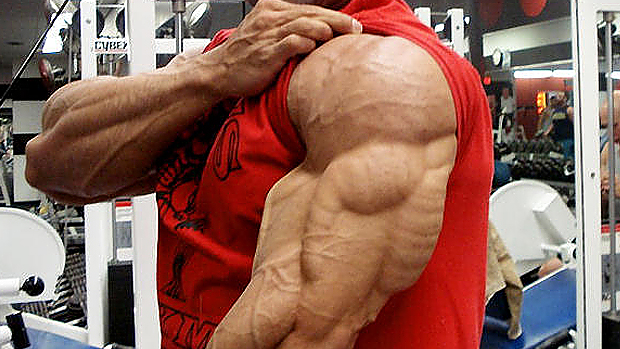
Triceps Workouts
However, what you can trust is Vince DelMonte ‘No Nonsense Muscle Building.’ It is safe and effective, and promises life-changing muscle growth. You can gain more than 40 pounds of lean muscle mass in just 24 weeks, with no more than 4 hours per week at gym. If you don’t want to go to a gym, that is fine too. You can always perform these injury-free workouts at home as well. They will work your muscles from new angles and hit your untapped muscles to build slabs of impressive, dense muscle group.
Vince DelMonte ‘No Nonsense Muscle Building’ also contains diet plans – derived from everyday food that can be easily found in your fridge. You do not need to buy any expensive supplements and blend different ingredients for an extra-rich shake. Diet plans in Vince DelMonte ‘No Nonsense Muscle Building’ are simple and easy to follow, so you can conveniently stick to a schedule. And there are plans for each body type – so you can select the ones that suit you. The dietary recommendations will improve muscle growth and promote repair.

With Vince DelMonte ‘No Nonsense Muscle Building,’ you will gain confidence and be what you always wanted to be. You will literally feel that you are gaining strength. Plus, you will have an impressive exterior that is sure to make heads turn. Say goodbye to unfit clothes. You can turn on the muscle building switch in your body – not just turn it on, but shift to ‘turbo’ mode. Its time you join more than 8000 people who have benefitted from Vince DelMonte ‘No Nonsense Muscle Building.’