How Much Protein You Need and

Pro Bodybuilders eat about one gram (sometimes even 1.5 grams) of protein per pound of body weight or per pound of non-fat tissue. I'm sure you've seen that the recommended dail

Comments

Saturday, July 18, 2015

Protein Powder, The Skinny Guy’s Guide To Protein Powder

So what do you really need to know about protein powder? As a skinny guy or beginner to the whole bodybuilding scene you simply want to know a few answers. Is protein powder necessary? Does it really work? How much do I need? What kind should I take? What is the best? And finally, will any of these answers make a difference when it comes to getting jacked and attracting the ladies?
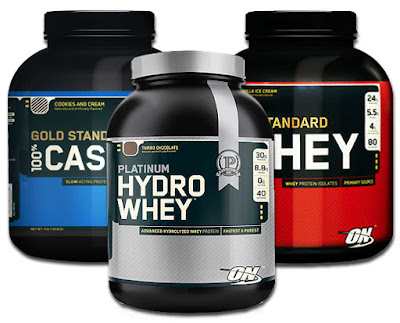
This article is not meant for you if you want to learn the science behind the ion-exchanged, cross-mutaed, isotopically labeled protein tracers – blah blah blah. In this article, I will strip away all the hype, science, and confusion that surrounds protein powder. By the time you are through this article and put it to memory, you will become the resident protein powder expert and amaze your friends the next time you visit the sport nutrition store. No more 2-hour shopping trips for protein powder because you don’t really have a clue what to look for!
Protein Powder

Is Protein Powder really necessary?

So, although protein supplements are not an absolute requirement for gaining mass, I have yet to meet any person able to get 400 grams of protein per day from cooking food. If your protein intake is greater than 200 grams per day I will suggest a protein powder – it will make your life a lot easier.

In addition, dollar for dollar, protein powders and meal replacement drinks tend to be more cost effective than whole food. Don’t get me wrong, though. Protein powders are still supplements in my book. Supplement means an addition to the diet. I emphasize this because the focus of any diet should be food.
Whole food is often preferable to powders because it can offer a whole spectrum of nutrients that powders cannot.

Most of your dietary protein should come from meat, fish, poultry and eggs. However getting all your protein from whole food is not always practical or convenient, especially if you have to eat 6 or more times a day to get your required intake. I will stress to you, for optimal muscle gains, 

you should limit yourself to a maximum of three shakes per day or 40 % of your meals

To some this might even sound like it’s going ‘overboard’ and I would not disagree.
The bottom line is that both food and supplements are necessary to achieve a complete nutritional balance as well as the desired level of protein intake, especially if you’re not a big fan of cooking. And I assume that over 95% of you reading this do not have a personal maid at home cooking all your meals while you sit around waiting for your next meal. Do not make the fatal mistake of thinking protein powders can take the place of a solid training and nutrition program.

Does protein powder really work and are they healthy?

I get this question emailed to me almost every day. I just showed how it ‘works’ as a supplement to help you hit your supplemental protein mark but you are probably still wondering, ‘Yeah, but is protein powder going to help me get muscular or is it a scam?” A better question would be, “Does protein really work?” and the obvious answer is ‘yes.’ You are fully aware that protein is composed of building blocks called amino acids, which performs a variety of functions in the body such as building and maintaining healthy muscles when combined with diet and exercise. Protein also:

  • Supports red blood cell production
  • Boosts your immune system
  • Keeps your hair, fingernails, and skin healthy

However, not all protein powder is created equal. Most protein powder contains an array of questionable ingredients such as aspartame, saccharin, fructose and artificial colors. It’s interesting to note how unhealthy most of these protein powders actually are. Look for a protein powder with natural ingredients rather than products that are sweetened with chemicals and made with ingredients that are certainly not going to create an environment for muscle growth and fat burning.

Also avoid products with refined carbohydrates such as fructose, sucrose or brown rice syrup. Make sure that the product is made from a reputable company that is genuinely interested in good health. Unfortunately supplement manufacturers will continue to meet the demands of bodybuilding consumers with unknown crappy products because we buy it and it is cheaper for them to create. Do your homework by seeking out unbiased reviews, investigating the company’s history, and reputation. And then make a decision and take responsibility!
In the past one of my criteria for a healthy protein product was that it was great tasting and that it should mix easily. Most protein powders mix quite easily, even with a spoon, however I was disappointed to discover that taste will inevitably be sacrificed for a safe and healthy product. I can live with this. You see, once a product is removed of all artificial chemical sweeteners such as aspartame or sucralose, and simple sugars, it is left almost tasteless and sometimes even gross.
How much protein powder do I need?

A better question would be, “How much pure protein do I need to achieve my goals?”
Protein is an extremely important macro nutrient and should be eaten frequently throughout the day. I recommend at least 1 to 1.5 grams of protein per pound of lean body mass. This means that if you are 150 pounds and 10% body fat (150 x 0.10 = 15 lbs of fat leaving 135 lbs of lean mass), you will require at least 135 to approximately 205 grams of protein per day.

I recommend that protein powder be used primarily for your pre-workout, workout and post-workout shake. This is when liquid food is more advantageous over whole food since it has a faster absorption rate.
I do not recommend protein powder do be used for meal replacements for more than two meals. Here is what a typical day might look like:

Meal 1 (breakfast) – whole food
Meal 2 (mid morning) – liquid protein meal
Meal 3 (lunch) – whole food
Meal 4 (mid afternoon) whole food
Meal 5 (pre and post workout) liquid protein meal
Meal 6 (dinner) whole food
Meal 7 (before bed) whole food

What kind of protein powder should I use?

Before deciding which protein powder is necessary, here is a short protein primer to help you make sense of the thousands of different protein powders from which to choose:

WHEY PROTEIN makes up 20% of total milk protein. Whey is recognized for its excellent amino acid profile, high cysteine content, rapid digestion, and interesting variety of peptides. Since it is very quickly digested the best time to consume it is before your workout, during your workout or immediately after your workout. These would be considered the phase in the day where you need energy the most and when your body is in anabolic state.

CASEIN PROTEIN makes up 80% of total milk protein. Casein is recognized for its excellent amino acid profile, slow digestive nature, and interesting variety of peptides. Since casein is slowly digested into your bloodstream, don’t use it during workouts or after workouts – you need a fast absorbing protein at these times. Instead, use a casein protein for all other times outside the pre and post workout window.

SOY PROTEIN is the most controversial of all protein types. While the soy groupies have gone to great lengths to label soy as a super food with magical effects, there is also a good amount of research that suggests soy protein may be contraindicated in many situations. BECAUSE OF ALL THE CONFUSION, IN MY PERSONAL OPINION, I SUGGEST AVOIDING SOY PROTEIN ALTOGETHER AND STICKING TO THE OTHER TYPES LISTED.

Protein Blends are generally a combination of several types of protein blends such as whey protein concentrate, whey protein isolate, egg protein, casein protein, and soy protein.

Why would you want a blend anyway? You will receive the full spectrum of proteins and you will receive varying rates of absorption from the different types of protein. Using a blend will create an anabolic environment from the whey and an anti-catabolic environment from the casein – use this kind at any time of the day but NOT before or after a workout.
Whey hydrolysates (also known as hydrolyzed whey protein, and are also called peptides), are powerful proteins that are more quickly absorbed; more so than any other form, since your body prefers peptides to whole proteins. Hydrolysates are produced through very low heat, low acid and mild enzymatic filtration processes, (those highest in the essential and the branched chain amino acids) and are potentially the most anabolic for short-term protein synthesis such as the pre and post-workout window.

Whey Protein Versus Whey Isolate:

Most whey protein powders that stock the supplement shelves are made up of whey concentrate and mixed in with a small portion of whey isolate. Comparing the two, whey protein isolate is more expensive than whey protein concentrate because it has a higher quality (more pure) and a higher BV (biological value). Whey protein isolate contains more protein and less fat and lactose per serving. Most whey protein isolates contain 90-98% protein while whey concentrates contain 70-85% protein.

Whey protein isolate is the highest yield of protein currently available that comes from milk. Because of its chemical properties it is the easiest to absorb into your system. Obviously with its high concentration, it appears that an isolate protein would be the obvious choice instead of a concentrate. However, this is an individual decision because the isolate is more expensive, and just because it is purer does not guarantee that it will help build bigger muscles. Its extra concentration may not justify its extra cost.

SO WHAT IS THE BOTTOM LINE? WHICH SHOULD YOU CHOOSE?

For the Pre-workout and Post-workout phases, as long as whey hydrolysate is the first or second ingredient on the supplement label then there is probably not enough in the product to influence protein synthesis to reap the optimal benefits. As stated, whey isolates are also a extremely high quality whey and for maximal anabolism isolates should be combined with whey hydrolysates for only the pre-workout and post-workout phases of your program. The inclusion of small amounts of whey concentrates will not harm you but this should not be the first ingredient on the tub of protein powder.

IF YOU ARE LOOKING FOR THE STRONGEST PROTEIN POWDER TO EXPLOIT YOUR FULL GROWTH POTENTIAL DURING THE GROWTH AND RECOVERY PHASES (ANY TIME OTHER THAN PRE AND POST WORKOUT PERIOD) THEN USE A BLEND.

You will receive the full spectrum of proteins and you will receive varying rates of absorption from the different types of protein. Using a blend will create an anabolic environment from the whey and an anti-catabolic environment from the casein.

Conclusion

I hope this article familiarized you with the basics of protein powder and gave you a foundation to work from when deciding on your next order. Don’t get caught up in the hype and start becoming a more educated consumer when you take your next trip to the nutrition store. Now you can tell the sales rep exactly what you are looking for instead of staring blankly at the shelves without a clue!

Oh yeah, protein powder will help you get more jacked and attract the ladies, but it’s not going to do it in a ‘ultra short period of time’ with the simple addition to your diet.

How to Get Ripped

Summer is in the horizon, as well as the time has arrived at sit back and relax under the sun. It’s go for beach days, barbecues and pool parties, and then for any serious weightlifter these activities also mean something you need : it’s how about the shirts to come off and showcase that rock-solid body-build they’ve been working on all year. No person wants to be walking around by using a soft, smooth and flabby body, as well as for the next month or two, all those serious lifters will be shifting into “get ripped” mode.

How do they typically deal with this?

They calm down the weights and perform higher reps.
This situation always been a widely accepted method of “cutting down” and if you ask most trainers in the fitness center they’ll show you that “heavy weights bulk up the muscle and lighter weights define the muscle”.
How to Get Ripped

Do you wish to know the reality behind the “light weight and high reps” method of obtaining a ripped and defined physique?

It really is completely, totally and utterly DEAD WRONG.
It couldn’t be farther from the reality . In fact , there will be no logical purpose of in this way of coaching whatsoever, and whoever dreamt up this downright ridiculous outlook has caused the vast majority of lifters to waste their time and hinder their development while working out .

Permit me to get this clear once and for all : you will never spot reduce. Basically , its physically impossible to target fat loss from a specific area on your body. Performing bench presses with light resistance and high repetitions won’t magically reduce fat off of your chest or cause it appearing harder etc defined.

Just about every time you wrap your hands around a barbell, dumbbell or cable, your primary goal should be to stimulate as much muscle growth as possible . There are no special, secret weightlifting exercises that could “define” your muscles or cause them to become more “ripped”.

Training with weights builds muscle mass, end of story.
Just how exactly do you “define” a muscle?

The exclusive method to “define” a muscle is by lowering your body fat level to be able to make your muscles more visible. Body fat reduction is possible in two ways:

1) Modify your diet.

You should lower your overall caloric intake to around 15x your bodyweight and focus on consuming smaller meals more frequently through the day . This would keep a metabolism naturally raised all the times and shall keep their body inside a constant fat burning state. Limit your intake of bad fats as well as just sugars, and focus instead on consuming lean causes of protein and reduced glycemic carbohydrates. It s also very important to prevent your water intake high on a grade of around 0.6 ounces per pound of bodyweight.

2) Perform suitable cardio workouts.

Let go of the standard method of moderate intensity cardio in 30-45 minute durations. If you wish to maximize your body’s fat burning capacity and likewise minimize the muscle loss that inevitably accompanies a fat burning cycle, concentrate on shorter cardio workouts performed with a high level of intensity. These kinds of workouts will shoot your resting metabolism throughout the roof and will permit you to burn maximum varieties of fat no matter if you are at rest. I highly recommend 3-5 heavy duty cardio sessions a week , spaced not less than 8 hours far from your weight workouts.

That’s all there is to it , folks. Take the notion of “light weight and higher reps” and throw it straight out the window, around the corner and going to happen . Following this misguided method will only cause you to lose muscle mass and strength, and will not be helpful to you in removing extra weight or defining your physique.

What you should in common mold those rock-solid muscles for the summer time is it :

1) Train with heavy weights and low repetitions to construct maximum muscle mass.

2) Modify your diet and implement cardio workouts to reduce body fat and create visibly harder and a lot more defined muscles.

End of story.

I’ll see you along at the beach!

Thursday, July 16, 2015

6 Ways to Bust Stress with Yoga

by Nina 
Sandy Carmellini, Age 53
“The antidote to stress is relaxation. To relax is to rest deeply. This rest is different from sleep. Deep states of sleep include periods of dreaming which increase muscular tension, as well as other physiological signs of tension. Relaxation is a state in which there is no movement, no effort, and the brain is quiet." —Judith Lasater 

The six yogic tools on our list today all provide you, in different ways, with the ability to switch your nervous system from Stress response (Fight or Flight mode) to Relaxation mode (Rest and Digest mode). Turning off the Stress response reduces your overall stress levels and allows you to experience the benefits of conscious relaxation. (See Life-Changer: Understanding Your Autonomic Nervous System for more information about your nervous system and The Relaxation Response and Yoga for information about the Relaxation response.) 

These stress management tools are not all interchangeable, however. Although you can use any of these practices for stress management and you can choose whichever techniques you prefer to trigger the Relaxation Response, these practices each have different roles to play in a balanced yoga practice. 

6 Ways to Bust Stress with Yoga


1. Meditation. This practice triggers the Relaxation Response through your focus on an object of meditation. Options include both seated and reclined meditation, with a mental focus of the breath or other physical sensations, mantra or sound, and visual imagery. See Starting a Meditation Practice and How to Meditate

The role of meditation in a balanced yoga practice is particularly important (see Is Meditation an Essential Part of Practicing Yoga? and Samyama: The Trinity of Dharana, Dhyana, and Samadhi). Although you can use meditation for stress reduction, its role in classical yoga is to quiet the mind to allow union with the divine or “liberation.” Meditation is also, as Timothy McCall says, a “fabulous tool to study your mind and slowly gain more control over it.”

2. Breath Practices. Simple breath awareness triggers the Relaxation Response by providing a mental focus. Pranayama practices that slow the breath or lengthen the exhalation are calming to the nervous system (see Pranayama: A Powerful Key to Your Nervous System). Breath practices can be performed either seated or reclined.

Like meditation, pranayama is also an important component of classical yoga, and precedes meditation as one of eight steps on the path to samadhi (union with the divine). It is considered an instrument to “steady the mind” and a gateway to dharana (the first phase of meditation). See The Fourth Branch of Yoga: Pranayama. 

3. Restorative Yoga. These modern yoga poses provides deep physical relaxation by supporting and relaxing your body, and can trigger the Relaxation Response if you practice them with a mental focus. Classic examples are Reclined Cobbler’s pose and Supported Child’s pose. See Restorative Yoga: An Introduction for more information. 

4. Supported Inversions. These modern yoga poses use gravity to trigger the Relaxation Response through the mechanisms that control your blood pressure. You don’t need a mental focus (although you can use one); as long as you are warm, quiet, and comfortable in the pose, all you have to do is let pose work its magic. Classic examples are Legs Up the Wall pose and Supported Bridge pose. See All About Supported Inverted Poses.

Caution: Inverted poses may be unsafe for those with certain medical conditions, such as high blood pressure that is not controlled with medication, eye problems, such as glaucoma or detached retina, recent oral surgery, or neck problems (for the inversions that put pressure on their necks). See Friday Q&A: Cautions for Inversions.

5. Savasana. In both plain and supported forms, this pose provides deep physical relaxation for your body and can trigger the relaxation response if you practice it with a mental focus. See Savasana (Corpse Pose) and Savasana Variations.

Savasana is an ancient yoga pose. Based on what I’ve read about the original practice, I’m going to go out on a limb and say that Savasana is a reclining form of meditation. For some traditional yogis, it was a meditation on death, hence the literal translation of the name Savasana is “Corpse pose,” and it was sometimes even practiced alongside actual corpses. To practice Savasana properly, however, you must actually do the work of meditating while you are in the pose (and make sure you don’t fall asleep). If you don’t actually meditate while in Savasana, then, well, you are simply relaxing. But that's okay, too, if that is what you are after.

6. Focused Relaxation. These guided relaxation practices, which include basic body scans and visualization practices, as well as formal practices like yoga nidra, allow you to achieve both physical relaxation and reduce stress levels by guiding you through a deep physical relaxation experience and providing mental imagery that harnesses you to the present.

Focused relaxation practices are specifically designed as relaxation techniques, and as such do not replace meditation or pranayama in a balanced yoga practice. This is true of any form of Savasana in which an external voice is providing instructions and/or imagery for you.

Subscribe to Yoga for Healthy Aging by Email ° Follow Yoga for Healthy Aging on Facebook ° Join this site with Google Friend Connect

Wednesday, July 15, 2015

What is a Yogi?

by Nina 
“Time is but the stream I go a-fishing in. I drink at it; but while I drink I see the sandy bottom and detect how shallow it is. Its thin current slides away, but eternity remains.”—Henry David Thoreau 

A while back, a friend of ours who has been taking yoga classes for many years was stunned to hear me refer to Mohandas K. Gandhi as “the most famous yogi of the 20th century.” He challenged my statement. Apparently in his mind, unless you did Sun Salutations or, perhaps, spent years meditating in a cave, you weren’t a yogi. I explained that not only did Gandhi follow the yogic path of selfless service (karma yoga) and was an dedicated practitioner of the ahimsa (non-violence) but he also considered the Bhagavad Gita, with its message of non-attachment, to be his “mother.”  

“When doubts haunt me, when disappointments stare me in the face, and when I see not one ray of light on the horizon, I turn to the Bhagavad Gita, and find a verse to comfort me; and I immediately begin to smile in the midst of overwhelming sorrow. My life has been full of tragedies and if they have not left any visible and indelible effect on me, I owe it to the teachings of the Bhagavad Gita." —Gandhi

To be honest, I think I failed to convince our friend. In his mind, he said, it was only the classic yoga text the Yoga Sutras that defined what “yoga” meant. But it got me thinking.

Then, later on, Brad and I spent our Thanksgiving holiday in the Boston area. While most of the time we were in central Boston and Cambridge, we also visited friends and family out in what are now suburbs but what used to be—back in the day—small towns. As we were driving through the area, I realized we were very near the original towns where the Transcendentalists, including Emerson and Thoreau, lived. Many people don’t realize that in the mid-19th century both Emerson and Thoreau read early translations of the Bhagavad Gita and both were heavily influenced by this iconic yoga text.

“It was the first of books; it was as if an empire spoke to us, nothing small or unworthy, but large, serene, consistent, the voice of an old intelligence which in another age and climate had pondered and thus disposed of the same questions which exercise us.” —Ralph Waldo Emerson  

"In the morning I bathe my intellect in the stupendous and cosmogonal philosophy of the Bhagavad-Gita, in comparison with which our modern world and its literature seems puny and trivial." —Henry David Thoreau

In fact, Thoreau, who later became famous for the time he spent in solitude in a cabin on Walden Pond, was so affected by reading this work that he actually said:

“Depend upon it that, rude and careless as I am, I would fain practice the yoga faithfully. . . . To some extent, and at rare intervals, even I am a yogi.” 

Of course this didn’t mean he was doing Sun Salutations or Triangle pose (though he did give meditating a try). For him, after reading the Bhagavad Gita, being a yogi meant adopting a certain attitude toward life.  

"To be calm, to be serene! There is the calmness of the lake when there is not a breath of wind. . . . So it is with us. Sometimes we are clarified and calmed healthily, as we never were before in our lives, not by an opiate, but by some unconscious obedience to the all-just laws, so that we become like a still lake of purest crystal and without an effort our depths are revealed to ourselves. All the world goes by us and is reflected in our deeps. Such clarity!" 

This is one of the things I was getting at when I listed equanimity as one of the three major aspects of healthy aging (see What is Healthy Aging, Anyway?). I believe that it is not just the stress management techniques, meditation, and breath practices that will help me handle with some measure of equanimity whatever life throws at me in the years to come (though I do intend to keep up with those practices), but also the attitude that I take.

"I went to the woods because I wished to live deliberately, to front only the essential facts of life, and see if I could not learn what it had to teach, and not, when I came to die, discover that I had not lived."    

Subscribe to Yoga for Healthy Aging by Email ° Follow Yoga for Healthy Aging on Facebook ° Join this site with Google Friend Connect 

Tuesday, July 14, 2015

What is Flexibility, Anyway?

by Baxter
Wendy Sandsjo, Age 55, Adaptive Yoga Scandinavia
We have written a lot on the blog about improving and maintaining good physical flexibility (see Yoga and Flexibility: An Overview) but have not really provided a basic definition of what it is to start with. After almost four years of blogging, it’s about time, don’t you think? 

I had my own ideas about what flexibility is, but I decided to see how experts in sports medicine and exercise physiology define it. My favorite definition is from the Dictionary of Sport and Exercise Science and Medicine:  

“Flexibility is the range of movement around a joint; dependent on a number of factors, including the size and shape of the bones, the ability of tendons to stretch, the condition of the ligaments, normal joint mechanics, soft tissue mobility and extensibility of the muscles.”

To this list of factors, I’d add age, history of injuries, and health conditions that could limit or enhance flexibility, such as arthritis or Ehler-Danlos Syndrome. 

Now let’s look more closely some of these aspects of flexibility to get a better understanding of flexibility. (Is flexibility more complex than you originally thought?)  

Size and Shape of Bones

The things we are moving around when we do our poses are our bones. Our definition of flexibility mentions that the size and shape of those bones affects flexibility. If we compare the flexibility of two different joints, say the elbow joint and the vertebral joint between thoracic vertebrae 6 and 7, we notice a distinct difference in the range of motion or movement at those joints for which the size and shape of the bones is responsible. (The range of motion refers to the angular degree that two bones bend around one another in the movements we call flexion, extension, side-bending, and rotation.) Let’s start with the elbow joint:
When the elbow is fully flexed or folded in, and we straighten the arm out or extend it, it moves in an arc of about 180 degrees to do that, and it folds back about 180 degrees to do flex the joint to the starting position. It does not have much side-bending capacity, due to strong ligaments that have evolved to limit that movement and provide the joint with more stability in those directions. And the forearm bones just below the elbow joint do allow for good rotation through the length of the forearm and hand so we can easily turn our palm up and down.

Now let’s compare that to the smaller, rounder, flatter thoracic bones of T6 and 7.
Thoracic Spine in Blue and Yellow
These bones have three places where they make contact and a spongy disc in between them that contributes to their ability to pivot over one another to a bit. They can flex, extend, side-bend and rotate over one another, but to much smaller ranges of motion compared to the elbow, except that they can side-bend while the elbow cannot. Even though the movement at this one joint is not large, when you add the same movements of all the spinal bones above and below it together, the spine can move in all directions to a larger degree and is quite “flexible”!

Tendons

Tendons are a tougher tissue called “connective tissue” (because they connect things together!)—which are really continuations of another important connective tissue called “fascia” (more on that below)—that thicken and narrow at the two ends of muscles to attach the muscle to the bones. A tendon is inherently less stretchy then a muscle, so we really don’t want to try and stretch tendons to improve our flexibility. When we do, we risk tearing the tendons, which can result in tendonitis or inflammation of the tendon—painful! Ligaments are made of similar stuff as tendons, and they keep two neighboring bones close together and provide some stability for the joint, and at the same time allow for a certain “passive” range of movement at the joint. If I asked you to completely relax your arm muscles and allow me to move your elbow joint through its range of motion, the ligaments would contribute to how far I can take you in each direction to a large degree. We also don’t want to actively stretch the ligaments, because, like the tendons, this usually results in tearing them and injuring the joint and negatively affecting flexibility.

Joint Mechanics

Normal joint mechanics are unique in each joint and have evolved over time to allow certain movements to take place at those joints. But some consistent factors influence the mechanics of the joints: the shape of the bones, the coating of cartilage between the bones, the tough connective tissue sleeve called the joint capsule around the mobile joints, the slick oil-like fluid in the joints, the number of ligaments around the joint (which varies from joint to joint), the number and placement of muscles that attach around the joint, as well as the fascia that surrounds the muscles in a plastic wrap-like enclosure. 

Because each of us is slightly different, there can great variability between even two individuals with regard to this aspect of flexibility. And this is the result of factors beyond our control to change, such as a unique skeletal structure that might limit flexibility in the hips or knees, for instance. All the “stretching” in the world will not have an effect of the basic boney structures.

Muscles and Fascia

The “extensibility” of the muscles mentioned in the original definition refers to the ability of the muscle to be stretched or lengthened. (This is probably what most people think of when they hear the word “flexibility.”)

Here, age can be a big factor (see Yoga and Flexibility: An Overview), because as we age, the composition of muscles and connective tissue begins to change and both those structures become less extensible, and therefore less flexible over time. But, as we have written about in the past, regular yoga practice is one way to try to maintain good extensibility of the muscles and fascia. It turns out that fascia, which not only surrounds muscles, but also just about every other structure in the body, can also stretch and change length and size along with the muscles. In healthy flexibility when layers of fascia—which make up some of the body’s soft tissues—come up against one another between two neighboring muscles, they slide past one another. But this is not always the case, especially when someone is very sedentary or is unable to move for a while, such as after a hip fracture. Then these layers of soft tissue can lose some of their extensibility and mobility. So returning to yoga practice with an emphasis on healthy stretching of muscles and fascia could help you regain some of this.

Variability

Within an individual, flexibility can vary quite a bit from joint to joint. For example, my hip joints have very good flexibility in poses like Cobbler’s pose and Lotus that involve a combination of flexion, abduction, and external rotation of the hip. But I have very limited pure hip flexion, which is needed for standing forward bends, for example. So, am I flexible or inflexible? You see the dilemma. So be careful not to label yourself as this or that without good examination of your flexibility in all areas of you body.

Subscribe to Yoga for Healthy Aging by Email ° Follow Yoga for Healthy Aging on Facebook ° Join this site with Google Friend Connect

Monday, July 13, 2015

Thoughts about Quieting the Mind

by Nina
Number 48 by Jackson Pollock*
The first time I read the definition of yoga in Patajanli’s Yoga Sutras, I have to admit my eyes glazed over a bit. Okay, a lot. 

1.2 Yoga cittavritti nirodha
1.2 Yoga is the cessation of the movements in the consciousness. — Iyengar


It seemed so abstract! What are the movements in the consciousness? And why do you want them to cease? And what did all that have to do with what I’d been learning in my yoga classes? 

It wasn’t until I heard Patricia Walden discussing the meaning of the compound word “cittavrtti” (translated above as “movements in the consciousness” with “citta” being “consciousness” and “vrtti” being “movements”) that I had my little epiphany. Patricia described the vrttis as being “revolutions” of the mind and connected the word “vrtti” to the “revolved” poses we do in our asana practice, such as Parivrtta Trikonasana, Parivrtta Arda Chandrasana, and Parivrtta Janusirsasana. 

The Whirls of Consciousness

Once I learned that vrttis could be thought of as “revolutions” of the mind, I started to think about the way our minds tend to cycle over and over with the same thoughts. When we are depressed or anxious or mentally stressed out, aren’t we tormented by negative thoughts and emotions that go round and round? What if I miss my deadline? What if the plane crashes? What if I can’t fall asleep tonight? Or, if only my lover hadn’t left me. If only I wasn’t so helpless/afraid/overwhelmed. If only my parents had loved me more. (See Yoga Sutra 1.2: Restricting the Whirls of Consciousness). Later Baxter added to my understanding of this by pointing out that in addition to fears about the future and regrets about the past, our vrttis can include judgments about the present, such as “I suck at meditating,” or “I hate that person.” 

In fact, the Yoga Sutras identifies five afflictions that basically sum up all the negative thoughts we tend to experience.  

2.3 avidya asmita raga dvesha abhinevesha klesah


The five afflictions (klesas) which disturb the equilibrium of consciousness are: ignorance or lack of wisdom, ego, pride of the ego or the sense of ‘I,’ attachment to pleasure, aversion to pain, fear of death and clinging to life. —Edwin Bryant 


Now the idea of being able to quiet those thoughts—to cease their movements—seemed quite appealing! (Not all the vrttis are negative thought patterns, by the way; those are just my example of some vrttis I’d really like to restrict. Edwin Bryant defines the vrttis as “any sequence of thought, ideas, mental imaging, or cognitive acts performed by the mind, intellect, or ego.”)  

So that’s why I started to prefer a different translation of the same sutra, one that translated “vritti” as “whirls” rather than movements or fluctuations.

1.2 Yoga is the restriction of the whirls of consciousness. —Georg Feuerstein 

That's very evocative, isn't it? It made me think of a Jackson Pollock painting....
 
Quieting the Mind  

In yoga philosophy, the whirls of consciousness not only cause suffering by disturbing our equanimity, but they also prevent us from being present and realizing the truth. Patanjali states the aim of quieting the mind in very next sutra:

1. 3 When that is accomplished, the seer abides in his own true nature. —Edwin Bryant  

So how do we quiet the mind? Yoga was initially developed (or perhaps “evolved” is a better word) for that purpose. Thousands of years of different kinds of yoga practice have resulted in a lot of different methods for quieting the mind, including meditation, breath practices, and chanting. But traditionally the recommended practice is meditation (see Samyama: The Trinity of Dharana, Dhyana, and Samadhi ). As the Yoga Sutras says: 

2.11. The states of mind produced by these klesas are eliminated by meditation. — Edwin Bryant 

Interestingly, Desikachar has a completely different and very straightforward translation of sutra 1.2, which essentially defines meditation in a nutshell. In his definition, the moment of quieting the mind through meditation IS yoga.  

1.2 Yoga cittavritti nirodha
1.2 Yoga is the ability to direct the mind exclusively toward and object and sustain that direction without any distractions. —Desikachar 

Whether or not the aim of your practice is to achieve union with the divine or simply cultivate contentment, the concept of quieting the mind is useful because restricting the whirls of consciousness fosters equanimity. It also teaches you about how your mind works. When you start to become aware of the vrttis—of the way your mind gets caught up in them—they start to lose some of their power over you and you can begin the process of separating yourself from them.

Subscribe to Yoga for Healthy Aging by Email ° Follow Yoga for Healthy Aging on Facebook ° Join this site with Google Friend Connect

Saturday, July 11, 2015

Balance Pose of the Week: Roman Candle

Subscribe to Yoga for Healthy Aging by Email ° Follow Yoga for Healthy Aging on Facebook ° Join this site with Google Friend Connect