How Much Protein You Need and

Pro Bodybuilders eat about one gram (sometimes even 1.5 grams) of protein per pound of body weight or per pound of non-fat tissue. I'm sure you've seen that the recommended dail

Comments

Showing posts with label classes. Show all posts

Friday, April 24, 2015

Friday Q&A: This Class May Not Be Good for You!

Fir Forest by Gustave Klimt
A reader left this question on our post What Your Yoga Teacher Really Wants to Know:

Q: What if you're a fairly new teacher and someone shares something of the above with you but you don't really feel confident in providing a modification. Like you think, "Yikes! was it x posture or y pose that someone with her condition shouldn't do?" Or "Gosh, I can't remember which poses are contraindicated for that condition!" Have you ever told a student he/she couldn't participate after hearing something they're dealing with?


A: As many of my recent teacher training graduates tell me, this situation comes up all the time for new teachers, or teachers who have not been trained to work therapeutically with problems their students may have. And although there is no one answer on how to address such a dilemma, several responses come to mind, all of which I have used when I was a newer teacher. 

First off, you can be quite honest with your student and explain that you are not well versed in their particular issue but that they can certainly take your class that day if they feel comfortable listening to their own body’s feedback and backing up when they, the student, feel they need to. This does not guarantee that your student will not still get into some troubles, but you are at least honestly letting them know your limitations and openness to them being in class. 

Some students actually have been working with their health conditions and yoga already, so it is worth asking for them to briefly share with you what they know about their condition. Has their healthcare team given them any physical restrictions to observe? Have they been told by other yoga teachers how to modify for their condition? The new teacher then gets an on-the-spot tutorial, and may feel much more willing to have the student participate in the day’s class! 

A new teacher could also tell the student they don’t know specifically what to offer them today but then propose to look up the condition and have some options available in class next time or for a private session (if you are comfortable doing privates). Also, you could encourage them to skip class today and return on a date when you think you will have the needed info, just to be on the safe side. It’s not a bad idea to reiterate that you are most interested in giving them as safe and beneficial an experience as possible in class! 

Then, there is the rare instance when someone shows up for class with a serious issue you don’t know much about, for example, a serious neck issue, while you do know that the class you will be teaching that day includes several poses that will likely be inappropriate for them, such as poses in which students would be bearing weight on their necks. I think that if modifying the entire practice for the student is beyond your budding skills, in these truly infrequent situations, it is proper to state that the class you are about to teach is really not safe for them to do today, ask them to stop up front for a refund, and, if possible, recommend another class for them to try or give them an opportunity to meet for an individual session if you feel you can get some helpful information together to share with them. 

In some cases, it may be the particular style or level of yoga that you are teaching is not appropriate for a person with certain challenges. For example, lets say you are teaching a relatively athletic class and the student has a condition that you don’t know how to accommodate, like acute recovery from heart attack, Fibromyalgia, or Carpal Tunnel Syndrome, to pick just three from our lists in What Your Yoga Teacher Really Wants to Know, you will be doing them a favor if you let them know that your class really isn’t really the best one for them. (Some people have been told that yoga will be beneficial for their condition and then head off to their nearest class, without ever having received an explanation of the different types yoga and which kinds are suitable for someone with their particular needs.) 

I am sure there are other scenarios that may allow the new teacher, in the most transparent and compassionate way possible, to navigate this inevitable situation. If you have had a similar experience and want to share what worked for you as a teacher, or what worked well for you as the student on the other side of this situation, please leave a comment or send an email.

—Baxter

Subscribe to Yoga for Healthy Aging by Email ° Follow Yoga for Healthy Aging on Facebook ° Join this site with Google Friend Connect

Friday, March 6, 2015

Friday Q&A: Finding a Safe Yoga Class

In the Yoga Studio by Melina Meza
Q: What are your recommendations for finding a safe yoga class? 

A: In general, yoga classes provide more benefits than safety concerns, as long as you can find the right class for where you are starting. In the past, we have discussed the issue of staying safe in a yoga class from a few of different perspectives (see Take Care of Yourself or Your Students, 9 Tips for Being a Good Yoga Student and Resting Between Poses), but today I’d like to try and sketch out a more complete, three-step approach to keeping yourself safe in a yoga class. And this approach should start even before you walk into your first yoga class or any new yoga class....

1. Vet the Yoga Studio

Before you even attend a class for the first time, it is a good idea to visit the website of a potential studio to:
  • Check how long the studio has been in business. It is generally better to attend classes at a studio that has been in business for a while. If the studio is new, at least try to find a teacher who has significant teaching experience.
  • Review the bios of the teachers, with particular interest in how long potential teachers have teaching and what type of training they received. See Finding the Right Yoga Teacher and Friday Q&A: Finding a Yoga Teacher for information about choosing the right teacher for you.
  • Look over the class schedule to see if the studio offers beginning level classes or an introductory series (highly recommended for beginners!), and specialty classes that might meet your unique needs, such as a Back Care class if you have low back issues, or, if you are an older adult, do they offer special classes for your age group? 
If what you see online looks good, plan to check out the studio in person, noting how you are greeted at the studio, if your questions are answered to your satisfaction, and checking out the physical space as well. Make sure the studio looks and feels safe. Check for:
  • clean, non-slippery floors (such as wood, bamboo, or thin carpeting—no thick carpets) 
  • yoga props (these will help the teacher keep you safe)
  • clearly marked exits
  • adequate and accessible restrooms?
  • fire extinguishers
  • a first aid kit (if that’s important to you)
You also might ask about class size as you look at the practice space to make sure you will feel comfortable and not too crowded. 

2. Vet the Class and the Teacher

If you're very concerned about safety, another great way to screen for an appropriate class is to ask to observe the classes you are most interested in trying out. If you get the OK to do so (usually a good sign), try to arrive a bit early and get a good vantage point in the back of class so you can see the room well. Introduce yourself to the teacher and after sharing with the teacher any injuries or health issues you are dealing with (see What Your Teacher Really Wants to Know), ask if this class would be appropriate given your circumstances. Notice if the teacher addresses your concerns.

Then, as the students come in, notice if the teacher greets the students individually, and for new students, does he or she ask for the student’s name, and inquire as to any injuries or health issues? During the class, does the teacher give individual attention or recommendations to the students? Does the teacher offer a variety of options for the poses for those with varying degrees of ability? 

Try to assess whether the level of difficulty of the class and the pace at which it is taught seem possible for you to try safely. Are there props offered to make the yoga poses more accessible for those with physical limitations? 

Do you feel that there is adequate room around each student’s personal practice space—the yoga mat and the immediate area around each student—for everyone to practice safely without having to worry about the wayward limbs of a neighboring student? You will discover that there are some very popular classes, by virtue of the time of day they are offered or the popularity of the teacher, which can be quite crowded. So you need to decide if the space-to-student ratio is good for where you are at in your learning curve. 

Finally, do you get a sense that the teacher is not only concerned with student’s physical safety in exploring yoga asana but is also nurturing the growth of the students with an appropriate mix of encouragement? This may not become totally apparent until you actually take a few classes, but is worth considering as you settle into a regular public class.

3. Vet Yourself!

An important aspect of staying safe in a yoga class is the issue of self-responsibility. 

Start by considering your motivation. Why do you want to take the class? To lose a few pounds, to get stronger or more flexible, to improve your balance, or to lower your stress? Knowing why you are interested in the class will go a long way in guiding you to find the most appropriate and safest class for you. 

Second, be honest about where you are starting from and what your current condition is. Have you been active or inactive as of late? Are you under a moderate to high amount of stress? Are you dealing with any significant illness or injury that might impact your yoga experience? If so, be sure to choose a class that is appropriate for your current condition that will allow you to address your issues. And if you have been dealing with a significant illness or injury, consider taking a few private sessions with a senior teacher to prepare you for a public class. Taking private sessions to prepare you for a public class is actually a good option for anyone who thinks they learn best one on one; a lot of my new students choose to do a few privates sessions to learn the basics so they feel safer and more confident when entering into a group class. 

Third, ask yourself how well you tune into the messages from your own body. I wrote a while back in my post Tension vs. Compression about the concepts of tension and compression as they relate to sensations that can arise in your practice. Being able to differentiate between these feeling can go a long way in keeping you safe in class settings. The teacher cannot be keeping an eye on everyone at all times, nor do teachers have ESP to know if you are in pain. Your body’s messages to your brain will tell you when a pose is entering a potentially unsafe zone and you can bring yourself out of the pose at that time (see Resting Between Poses). 

Finally, can you ask for help when you need it? It is important that you not only get good at sensing what is happening in your body, but you also need to get comfortable asking for guidance when worrisome issues, such as nausea, dizziness, change in vision, shortness of breath, sudden unexpected pain, loss of sensation in a limb, chest pain or a racing heart, arise. I think you get it, right? Stop practicing when something like this occurs, get your teacher’s attention, and ask for help and guidance. 

See 9 Tips for Being a Good Yoga Student for more information about how to look after yourself in class. 

With these guidelines and suggestions, you should be able to do yoga in a public class with a high degree of certainty, as much as we can have in an uncertain world, that your experience with be safe and, hopefully, rewarding!

—Baxter

Subscribe to Yoga for Healthy Aging by Email ° Follow Yoga for Healthy Aging on Facebook ° Join this site with Google Friend Connect

Thursday, January 22, 2015

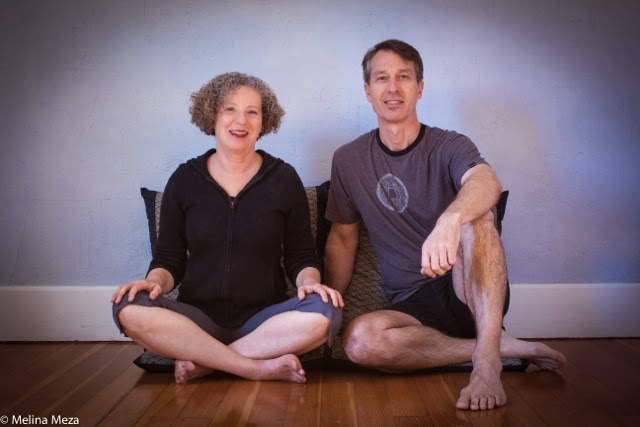
Yoga for Healthy Aging Summer Intensive: Register Now!

by Nina
People often write to us asking how they can study with us. Well, finally, now you can! In August 2015, Baxter and I will be offering our very first Yoga for Healthy Aging intensive. This 30-hour intensive will be held at Namaste Yoga in Berkeley, California, from August 3 to August 7, with required attendance on Saturday afternoon, August 8, for yoga teachers who want YFHA certification.

You can sign up for the intensive now on the Namaste Yoga site. (Scroll down until you see the words SIGN UP in orange.)

Pricing: $775* | $700 Early Bird available until June 15
YFHA Certification for teachers will require an additional $150 fee.

For people from out of town who wish to attend, we will help you find a place to stay. Send a message to Nina via the Contact Us page for more info.

About the Intensive

This course will provide instructions on maintaining your physical, mental, and emotional health as you age. The main focus of the course is on preventative strategies, covering:

  • Strength
  • Flexibility
  • Agility
  • Balance
  • Stress Management
  • Circulatory System/Heart Health
  • Brain Health
  • Equanimity
We’ll present the scientific background that explains how and why yoga works to foster healthy aging, so you’ll understand which techniques to use when. And we’ll teach yoga the essential yoga poses, yoga sequences, and other practices that will set you up for a lifetime of practice.

This intensive is designed for relatively healthy, relatively physically able participants. It will not include instructions for or information about yoga for seniors who cannot stand unaided and need to practice in chairs. It also will not include specific information about using yoga as therapy for medical conditions, although there will be a bit of general background on that subject.

For certified yoga teachers, this course will provide supplemental, specialized training in yoga for healthy aging techniques, which you can then teach to your own students. For yoga students with one or more years of experience, this course will provide you with the tools to create a personalized yoga program that meets your particular needs and concerns.

We’ll offer two different certificates:
  1. Course Completion certificate for yoga practitioners
  2. YFHA Teacher Certificate, for previously certified yoga teachers only, with additional teacher project and Saturday afternoon session
We're looking forward to meeting some of you in person!

Subscribe to Yoga for Healthy Aging by Email ° Follow Yoga for Healthy Aging on Facebook ° Join this site with Google Friend Connect