How Much Protein You Need and

Pro Bodybuilders eat about one gram (sometimes even 1.5 grams) of protein per pound of body weight or per pound of non-fat tissue. I'm sure you've seen that the recommended dail

Comments

Wednesday, September 12, 2012

Yoga Solutions for Anxiety

by Nina

In the last few of weeks, two different women I know told me they were having panic attacks. As their life circumstances were very different as were their symptoms, the private lessons I gave them ended up being very different as well. That’s the beauty of yoga (and the private lesson), which allows you to customize your solutions to a particular person’s needs and concerns. But before I started to write about my yoga solutions for anxiety, I felt some background about anxiety and how yoga helps would be useful. So I asked Baxter to write a general post about the topic, which we put up on the blog yesterday (see 9/11 Anxiety and Yoga). 

Now that you know something about how yoga helps with anxiety, I’ll tell you what I explained to both women about the basic strategy for combating anxiety and panic attacks. For each of them, we needed to come up with two things:
  1. One or more techniques for heading off an anxiety or panic attack when it occurs. This is a short-term goal that can help you deal with your current condition more effectively.
  2. A regular yoga practice to pacify the nervous system. Since anxiety and panic attacks are related to chronic stress, practicing some form of relaxation on a regular basis can help prevent the anxiety and/or panic attacks from occurring in the first place.
In the first case, the woman’s mother had recently died, after she had been at her mother’s bedside in the hospital for weeks. Her panic attack had come in the middle of the night, when she was alone in bed. After some experimenting, we decided together that the best technique for heading off a full-blown panic attack would be a breath practice where she consciously extended her exhalation. Although even just breath awareness can help with a panic attack or anxiety, having a specific exercise to do helped her focus more on her breath instead of just “watching” it. The good news is that she later reported back to me:

“The breathing has totally helped me, and it even helped me during the day when I was starting to freak out at a restaurant!”

For long-term relaxation, we experimented with some supported poses. In the end the one that suited her best was Legs Up the Wall pose, a supported inversion that triggers the relaxation response. Since she was very active already with ballet lessons and wasn’t a regular yoga practitioner, we decided that starting with a mini practice of this one pose for 10 to 20 minutes a day would be the best approach for her.
In the second case, the woman had recently moved to the Bay Area, away from family and friends, to go to graduate school and had already tended in the past to suffer from anxiety. Her panic attacks came in the daytime, when she was fully awake and getting ready to face her day in her new home. I also taught her the same breathing techniques of simple breath awareness and extending the exhalation but she didn’t seem interested in doing breath work. She was hyper and restless and wanted to do asana! And the thought of sitting still to meditate or lying down to practice breath awareness or yoga nidra made her feel even more anxious.

So for this woman, we decided the best strategy would be to do a very strong asana practice in the morning to head off the anxiety and to prepare herself for relaxation by tiring her out a little. I recommended sun salutations and standing poses possibly followed by forward bends (which some people find calming), but suggested that she stay away from backbends. Although backbends can be uplifting they also tend to energize you, and if you’re anxious and hyper that can be too much. Then I urged her to practice either a supported inversion or meditation at the end of her practice to pacify her nervous system. After trying every single supported inversion (see Inverted Poses), it turned out that the one that felt most comfortable and relaxing to her was a Supported Bridge pose with straight legs. I recommended that she practice this pose at the end of her practice from 10 to 20 minutes to pacify her nervous system.

As you can see from these two cases, yoga solutions for anxiety can greatly vary, depending on the person’s particular situation, yoga experience, and personal preferences. But as Baxter mentioned yesterday, there are three different possibilities for treating anxiety: pranayama, meditation, and asana. You can use them in any combination that works for you, and hopefully you’ll soon be able to reap both short-term and long-term benefits

Note that although a guided Savasana or yoga nidra can be tremendously helpful for anxiety (yoga nidra in particular has been very successful for treating veterans with PTSD), neither woman seemed inclined to try these practices. Having suffered from anxiety myself, I could understand that just the thought of lying down for a long period of time while you are awake is intolerable. However, if anyone out there is suffering for anxiety and wants to try either of these practices, go to the Audio Tracks page on our blog find Baxter’s relaxation tracks.

Subscribe to YOGA FOR HEALTHY AGING by Email ° Follow Yoga for Healthy Aging on Facebook 

Tuesday, September 11, 2012

9/11 Anxiety and Yoga

by Baxter

Some years ago, when Nina and I were working on a series of yoga classes for stress management, I read the book The Relaxation Response by Dr. Herbert Benson, and an interesting finding from the work he did has stuck with me. He noted that his blood pressure patients who meditated regularly not only saw improvements in their blood pressure readings, but they also had certain substances in the blood stream that increased or decreased.  One of those substances was lactate, or lactic acid, which is a byproduct of cells using sugar or glucose for fuel. It had already been noted back in the 60s that folks with anxiety disorders often had elevated levels of lactate in their bloodstream compared to individuals without anxiety. Since meditation seemed to lower lactate levels, it seemed like a great potential treatment.

More recently, an article in Scientific American looked at lactate and other markers in the body that could account for why some folks develop panic disorders, an extreme form of anxiety. Studies done in the last two years point to the pH in the brain as a possible causative factor in the experience of fear, and by extension, anxiety. It seems a more acidic pH in the brain is associated with more active trigger of the fear centers in the brain. In fact, there are receptors at individual synapses, the spaces between to nerve cells, that respond to elevated levels of acid. In the area of the brain strongly associated with the emotion of fear, the amygdala, this increase in local pH can trigger fear responses.
They also noted that carbon dioxide levels, when increased in the blood stream and the brain, lead to greater acidity. And other studies have demonstrated that patients with panic disorders are more likely to have an event if they inhale a higher concentration of CO2, compared to non-anxious individuals. These researchers also addressed the lactic acid phenomena that Dr. Benson noted years before: patients with panic disorder tend to generate excess lactic acid in their brains. We all generate lactic acid in our brains as sugars are burned as fuel, but in people with panic attacks, even normal mental activity to lead to an accumulation of lactic acid in the brain.

So if a decrease in pH in the brain—whether due to CO2 build up or lactic acid build up in certain areas of the brain—could be a trigger for anxiety and panic attacks, how could yoga diffuse this situation? Well, way back in the 60s it was already observed that the “relaxation response” that arose from simple meditation practice could lower the pH in the blood stream. This might indicate that it could be lowered in the brain, too. So I’d give high marks to establishing a regular meditation practice, even if only for ten minutes at a time. Secondly, certain pranayama practices could theoretically lower blood CO2 levels slowly and gradually, but whether that would lower CO2 levels in the brain is uncertain. That sounds like it would be worth a trial, however. And finally, the authors of the study noted that “one of the many beneficial effects of aerobic exercise training (like running or cycling) is that metabolically active tissues (including the brain) become more efficient at consuming–removing—lactic acid.”  And although not all yoga asana practices are aerobic, some are to a certain degree. So, physiologically, your asana practice, especially if it is more vigorous, could be the third prong in your yoga tools approach to anxiety, panic attacks and fear.

Here is a link to the 2010 SA article here so you can get more details on the work I’ve alluded to: scientificamerican.com. And may you and yours be safe and anxiety free this 9/11 anniversary. 

Subscribe to YOGA FOR HEALTHY AGING by Email ° Follow Yoga for Healthy Aging on Facebook 

Monday, September 10, 2012

Yoga May Be the Best Activity for the Elderly

by Carol Krucoff, E-RYT 500

Inviting elderly people to try yoga can be challenging, since many harbor the common misconception that you must be young and fit—or at least able to get down and up from the floor—to practice. That’s why I always tell prospective students: If you can breathe, you can do yoga.

Now, a new study suggests that for older adults—even frail elders in their 80s and 90s—yoga offers substantial health benefits and may be the best form of physical activity.  Writing in the Journal of Alternative and Complementary Medicine, geriatrician Neela K. Patel, MD, MPH, CMD, and colleagues at the University of Texas Health Science Center at San Antonio, performed a meta-analysis of 18 randomized control trials of yoga for people over age 60 and compared the results with those from other exercise programs for seniors (see here). Her conclusion: 

“Yoga may be superior to conventional physical-activity interventions in elderly people.”

I recently had a lovely interview with Dr. Patel; it was very exciting to see research that supports what we teach! According to Dr. Patel, many health problems facing seniors can be directly influenced by yoga:

“Yoga not only improves health-related quality of life, but also enhances walking and balance, muscle strength, cardiovascular health, blood pressure, sleep and functioning of other systems. Yoga may also have psychosocial benefits through prevention and control of common health and emotional problems linked with aging.”

All four aspects of exercise, as outlined by the National Institute on Aging—strength, endurance, flexibility and balance—can be improved through an appropriate yoga practice, Dr. Patel told me, adding that the ability to individualize the practice and its social nature may also benefit seniors. But the most important aspect, she says, may be yoga’s impact on enhancing seniors’ ability to perform activities of daily living and maintain independence.

“Having the leg strength to get up and down from the bed to go to the toilet, and the arm strength to open a door, can make a tremendous difference in an older adult’s life,” she says. “And yoga goes beyond physical health, to help relieve anxiety and calm the mind, which is also critical.”

Dr. Patel has observed the impact of yoga practice on older adults first hand, as her husband, Sreedhara Akkihebbalu, teaches classes to elderly residents of an independent living community and a nursing home—ages 75 to 102. Perceived benefits among those students in independent living include improved gait and balance, deceased pain, decreased need for medications, improved sleep, less anxiety and depression and increased mobility. She notes:

“For the oldest old, the breathing practice can be particularly beneficial. Yoga shows great potential for improving quality of life in even the frailest of older adults."

Carol Krucoff, E-RYT 500, is co-director of the Therapeutic Yoga for Seniors teacher training offered at Duke Integrative Medicine and the Kripalu Center for Yoga and Health, and co-creator of the new DVD, “Relax into Yoga for Seniors,” available at pranamaya.com.  She is author of several books including Healing Yoga for Neck and Shoulder Pain.  Visit her websites:  yoga4seniors.com and healingmoves.com.

Subscribe to Yoga for Healthy Aging by Email ° Follow Yoga for Healthy Aging on Facebook ° Join this site with Google Friend Connect


Friday, September 7, 2012

Friday Q&A: Knee Restrictions

Q: I have chondromalacia from an untreated sprained knee that I got 5 years, at 2 months post partum. Once I finally had it diagnosed, I needed nearly a year of physio for my knee to become 95% functional. So today, I cannot hyperflex, or sit on my knees, or go on all fours. Because I am very interested in practicing yoga now, I need to adapt several poses. Some impossible positions for me are the child's pose, the lotus, and anything stemming from those poses. I wonder if you have any advice to offer regarding adaptation as I follow videos and don't attend a formal yoga class. Many, many grateful thanks to you for your help!

A: Thanks for your very interesting question. Since chondromalacia of the knees is a fairly common condition, especially for younger women, I am excited to talk a bit about the condition and then share some general ways of modifying your poses to enjoy the bigger benefits of yoga while keeping that knee happy!

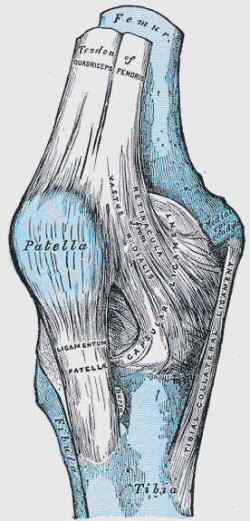
So let’s start off by defining chondromalacia, or what is also known as patellofemoral syndrome (PFS). The NIH website defines it as follows: “Chondromalacia of the patella —the softening and breakdown of the tissue (cartilage) on the underside of the kneecap (patella). The pain associated with this condition is often felt at the front of the knee or kneecap (patella).” Another common cause of pain in this area of the knee is runner’s knee or patellar tendonitis. Because chondromalacia involves actual breakdown of the healthy cartilage that lines the back surface of the knee cap, recovery times, as you have experienced, could be a lot longer than those for inflammation of the patellar tendon, which connects the quadraceps muscle to the front shin bone, via the knee cap.  Runner’s knee usually refers to the section of tendon between the patella and the tibia or anterior shinbone.

It is always helpful to have a sense of how this could come about. Normally, the kneecap sits in front of the lowest part of the upper leg bone, the remur bone, when you leg is straight at the knee joint. Once you bend or flex the knee to 90 degrees and beyond, the kneecap ends up in front of the bottom of the femur bone. The patella has a midline raised grove on its backside like the hull of a sail boat, and the bottom of the femur bone has a groove in it that the patella normally slides on, like a perfect channel for the bottom of the boat. Both surfaces of these bones are normally coated with smooth, slick, cushioning cartilage, so movement proceeds smoothly, silently and without much of any sensation. So how do things go wrong?  Again, according to the NIH:

“Anterior knee pain (such as PFS) begins when the kneecap does not move properly and rubs against the lower part of the thigh bone. This may occur because:
  • The kneecap is in an abnormal position (also called poor alignment of the patellofemoral joint)
  • There is tightness or weakness of the muscles on the front and back of your thigh
  • You are doing too much activity that places extra stress on the kneecap (such as running, jumping or twisting, skiing, or playing soccer)
  • You have flat feet”
Because deep bending of the knee joint brings the kneecap and the thighbone into close tighter proximity of one another, inflammation and pain can ensue when PFS is present. So, it is not surprising that you experience pain (I am assuming that is why you are avoiding these poses) in poses like Child’s pose, where not only are you deeply flexing the joint, but you are also putting your full body weight right over that knee. And Lotus involves not only deep flexion of the knee, but also a spinning outward of the shin bone in order to get your foot on you opposite thigh, adding another 3D challenge to an already sensitive joint.

In general, I’d recommend avoiding the deep fold of the knees in poses like Child’s pose and Hero pose (Virasana). One way to do Child’s pose is just flip it upside down, lying on your back, with your hands behind the knee joint to encourage a bit of space in the joint.  For Hero pose, a block on its highest height under your hips could relieve the intensity of the fold and allow for a modified version. Instead of Lotus pose, substitute Cobblers pose (Baddha Konasana), where you can keep your feet further away from your pubic bone and control how deep of a fold of your knees you can do without precipitating pain.

For straight leg standing poses, like Triangle, if it is the knee of the front leg where you experience pain if the knee hyper extends, then there are ways to train yourself to find more even alignment of the femur and lower leg bones, so you can still practice the standing poses with out aggravating your knee.  One use of props that some find helpful is to angle a block just behind your front shin so that it pushes up and forward against the back of your calf at just the point your knee would be going to far toward hyperextension.  It takes some playing around to find just the right spot for the block, but it can start to train your joint receptors to tell you where straight is. Once you know that spot or alignment, you can take the block away.

An experienced yoga teacher could also share many ways to modify poses so you could begin to feel more competent in caring for yourself with the basic yoga postures, and eventually could set the stage for you feeling safe to try a regular class. And always keep in mind that accomplishing challenging yoga poses is not really the goal of yoga, and that you always want to create a practice that serves your bigger goals, such as mental equanimity and clarity, while honoring the unique challenges that each of our body’s will continue to dish up.

—Baxter

Thursday, September 6, 2012

Caloric Restriction: Comment and Response

by Nina and Brad

Brad’s post on caloric restriction (see Caloric Restriction and Longevity) prompted an interesting comment from Kathleen Summers MD PhD that I thought it worthwhile to share with you. Rather than having Brad respond in the comments section (I'm not sure how many of you actually read the comments), I asked him to reply to her comment at the end of this post. So have a look! This debate is a very good example of how little scientists currently understand about the aging process (a theme we return to periodically) and provides a hint of some of the many issues surrounding the controversy regarding the best diet for healthy aging.

Posted by Kathleen Summers MD PhD to YOGA FOR HEALTHY AGING

The biggest lesson here is that an excess of energy intake brings disease, disability, and early death. Restricting intake protects against cancer - and also diabetes, arthritis, and heart disease to some degree, although the numbers in the latest study didn't reach significance for the latter (potentially due to limited sample size). Teasing out just what the optimal amount of intake is takes time and research. And it's complicated - there's nutritional, environmental, mental/emotional health, and genetics among other factors playing a role.

The monkeys in both groups of the Wisconsin study ate more and weighed more than the NIH monkeys. The researchers used different sources for their proteins, fats, and carbs as well as a different approach to vitamin and mineral supplementation.

We have one primate study showing extended life span with calorie restriction and one not showing the same but yet other positive results. Let's not jump to absolute conclusions about what the latter study means.

Response from Brad Gibson PhD

Kathleen,

You make some good points, and I agree that this most recent NIA caloric restriction study needs to be considered within the context of other published work. There are undoubtedly many nuances in experimental design and interpretation that future experiments will need to address. That said, my major point is that the data for CR in primates is weak at best.  Many of my colleagues were very critical of the earlier Wisconsin study on two counts: the fact that they fed the control group a fairly high caloric diet and that they removed animals from their final analysis on the basis that they died from non age-related reasons. The removal of animals in the final statistical analysis was a very dubious call. And, as it was pointed out in the NYT article—and by many critics of the Wisconsin study—if those animals were included there was no difference in longevity between the two primate groups. Combined with other studies on more diverse genetic backgrounds in mice that show very mixed effects of CR, one really has to wonder how much traction the CR models has left in it, at least in mammals. Oddly, the data on other model organisms (flies, worms etc.) remain strong.  But one can only push these conserved evolutionary arguments so far.

While there may be benefits in a CR diet as you indicate (e.g., cancer and heart disease), one needs to make a distinction between a low calorie diet and caloric restriction. Many years ago a very prominent scientist in the field of aging who practiced the CR diet stated at the end of his seminar that "we scientists" needed to make a case to the public about the benefits of CR. I challenged him on this assertion, saying that American's relationship to food is so screwed up as it is, that to send a message that food is your enemy is not good advice. There is no evidence that CR in humans is beneficial. In contrast, there's plenty of evidence that a sound, balanced, healthy, low-to-moderate caloric diet (especially one that limits or avoid meat and dairy) is good for you. I suspect we are in agreement on that point.

I also agree that we are still far from drawing a final conclusion on the benefits of CR on human longevity. I was a bit flippant on this point in my last blog post. Guilty as charged. And there is little doubt that there will be more NIH studies examining CR and longevity in various mammalian and primate models as there is still compelling and interesting evidence that needs to be sorted when all animal models of CR and longevity are considered. However, I for one, will be placing my bets elsewhere.

Wednesday, September 5, 2012

Recovering from Strokes with Yoga

by Baxter
Flowers in a Rock Crevice by Michele Macartney-Filgate
I recently received an email from a recent graduate of a yoga teacher-training program who is looking for more guidance in how to work with her students who have suffered a stroke and are attempting to recover some of their lost function. She happened upon a piece I did for Yoga Journal Magazine a number of years back (see here) and found it useful, but wanted any additional advice I could provide. Seemed like a good topic to share with all of our readers here, so let’s start by defining stroke.

According to the Mayo Clinic: “A stroke occurs when the blood supply to part of your brain is interrupted or severely reduced, depriving brain tissue of oxygen and food. Within minutes, brain cells begin to die.” Stroke is considered a medical emergency that can result is severe disability and death, so it is one of those conditions that need immediate attention. And in the span of time since I began practicing medicine, some significant changes have taken place in the acute treatment of stroke that have gone a long way in improving one’s chances of a better outcome. In fact, in the last 15 years the risk of dying from a stroke has dropped significantly. Better care of the risk factors associated with stroke, such as high blood pressure and cholesterol and diabetes, may be playing a role in these improvements, too. However, getting to a hospital immediately if you suspect stroke is the number one thing to do once symptoms show up.

Once a person has had a stroke, there are innumerable changes that can occur, including trouble walking or even balancing easily on two feet, trouble speaking or understanding what others are saying, paralysis or numbness of the face, arm or leg on one side of the body, or trouble seeing in one or both eyes. There can be mild, moderate or severe mixes of these various deficits in stroke survivors.

Despite the huge changes that can arise for someone who has suffered a stroke, new understanding of how the brain works provide encouragement that what was once considered a largely unchangeable thing (the brain) is now known to be highly changeable. This concept is known as “neuroplasticity.” According to well-known writer and neurologist Oliver Sacks, M.D., neuroplasticity is “the brain’s capacity to create new pathways.” There are now NIH studies looking at the brain’s ability to learn and grow new neural pathways after damage that are quite encouraging. And since physical therapy is considered an essential treatment for post–stroke recovery, yoga asana can supplement this quite nicely. And yoga may work because someone new to yoga is “learning” new patterns of movement, new skills of observation, as well as learning a new language, Sanskrit, and new verbal patterns, via memorizing yoga sutras and learning chants. So the brain is being maximally stimulated to lay down new neurons in many if not all of the areas that have been negatively impacted by the stroke.

As I have previously recommended, modifying asana practice via doing reclining pose variations either in a bed or on the floor if the patient can easily transfer up and down is quite helpful in situations of extreme weakness or balance problems. Another way to work if standing is still dicey is to do a chair-based practice, with one or more chairs available. A huge variety of poses can be done safely in this way, including clever modifications of sun salutations. I’d direct you to several books for more ideas, including Nischala Joy Devi’s The Healing Path of Yoga, and Sam Dworkis’ Recovery Yoga. Although not specifically written for stroke recovery, many of the ideas presented could be nicely adapted for this setting. And for those with more ability to do standing work, the use of the wall for supporting various body parts while doing any number of standing poses could be the next step in progressing students towards more normal physical functioning.

In addition, as way of working with the cognitive loses that can result from stroke, working with mantra, chant and pranayama could be quite helpful for most students. Always start off with simple variations of these things. Encourage regular, repeated practice outside of class once the student has learned the new “pattern.” It is really the participating in a discipline that may ultimately lead to the positive changes we would hope for our students who have had a stroke. Another modality that may help is certain “eye exercises” that have made their way into modern yoga classes. And although I don’t have a lot of personal experience with these, you could seek out a teacher well versed in such techniques to learn and share with your students.

In addition, due to the fatigue associated with stroke, as well as the mental-emotional stresses that arise, restorative practices and yoga nidra can play a wonderful role in supporting the work of the other tools of yoga you have already introduced to your students. And for teachers just starting out, you often have been given very limited exposure to working with students with special needs, such as stroke survivors. So, I highly encourage you to look for workshops and post-graduate therapeutic training opportunities to increase your skills and competence in working with these special folks. I may return to this topic in the future, but for now, this should give you some ideas to start working with right away. All the best in this very worthwhile endeavor!

Subscribe to Yoga for Healthy Aging by Email ° Follow Yoga for Healthy Aging on Facebook ° Join this site with Google Friend Connect

Tuesday, September 4, 2012

Stress, Your Health, and Yoga

by Timothy

As I travel around the globe teaching workshops on yoga therapy—the use of yogic tools from postures to meditation to help people heal—I am struck by what an enormous problem stress-related illness is.  Everywhere I go, from ultra-modern cities like Stockholm where I've spent the last week, to less developed nations, people young and old are suffering the health consequences of their increasingly busy schedules and sometimes even busier minds.

Surprisingly, in this time of widespread tension, unrest and economic insecurity, most doctors still seem not to fully appreciate the deadly consequences of out-of-control stress or how much something like yoga can help. In medical school we were taught about the connection of stress to such health problems as duodenal ulcers, migraine headaches and irritable bowel syndrome. But scientific evidence is increasing indicating that stress can be a factor in life-threatening conditions from heart attacks to depression to hip fractures. Ironically, doctors may be among the most at-risk members of our society, due to their endemic stress and lack of understanding of simple non-drug tools like yoga that can fight it.

When scientists talk about the stress-response system, they are referring to a complex web of events that ramp the body up to deal with an acute crisis. The sympathetic nervous system—the so-called “fight or flight” system—kicks in, which among other things increases blood flow to the large muscles that help you defend yourself or run away from a physical threat. Stress hormones like adrenaline and cortisol are also released. In response, blood pressure and heart rate go up and breathing quickens. Blood sugar and other energy stores are mobilized to fuel whatever challenge you are about to face. In case you are injured, your blood begins to clot more easily. In crisis mode, the body shunts energy away from restorative functions like digestion and reproduction, mediated by the parasympathetic nervous system, which you can think of as the “rest and digest” system.
Arctic Landscape by Michele Macartney-Filgate
This built-in stress-response system is well-adapted to acute crises but can lead to all kinds of problems if it doesn’t gets switched off after the acute crisis passes. Blood clots increase the risk of a heart attack or a stroke, as does the high blood pressure and elevated blood lipids that stress contributes to. Elevated levels of cortisol are associated with everything from major depression to osteoporosis to overeating and weight gain (and the many problems that result from that). And while the immune system initially gets stronger during an acutely stressful event, it starts functioning less well if the stress goes on too long, raising the risk of serious infections and, as at least some evidence suggests, autoimmune diseases.

The problem is that the ancient human stress-response system isn’t so well adapted to mostly non-physical modern world stressors like work deadlines, traffic jams, and even abstract ideas about whether you are happy or fulfilled. If you repeatedly mull these problems over, the chemical and physical changes that were designed to deal with an acute threat to physical health—and which are then supposed to shut off when the threat is removed—remain activated. Such mental tape loops can thus turn abstract worries into concrete threats to health and even to life itself.

Yoga is arguably the best overall system of stress reduction ever invented. More and more evidence suggests the practice can help treat and prevent a wide range of health problems (for details see my web site). Beyond the harmful effects on the body, feeling stressed is a drag. It can make you feel anxious, preoccupied, full of dread.

Yoga can—sometimes within minutes—quiet down an overactive stress-response system. One of the great insights of the ancient yoga masters is that when you move and breathe with awareness, it calms your nervous system and slows down the tape loops in your mind. When your inner monologue slows, most people experience a sense of peace, relaxation and a feeling of being centered.

At first, this only happens when you are doing yoga and perhaps for a short time afterwards. But if you maintain a steady practice, more and more you become aware of and can tap into the tranquility you find in yoga throughout the rest of your day. Over time, you can actually make your nervous system less reactive to minor stressors, and less likely to get knocked off balance by life's inevitable ups and downs. You learn that you can be in a difficult situation, but nonetheless keep the breath slow and deep, and the mind both relaxed and attentive.

This sense of inner calm can make you feel more grateful for what you have, appreciate the beauty around you (which you otherwise might not have noticed) and help you realize that some of the stuff you're getting bent out of shape about may, ultimately, not be very important. And that may be one of the best stress reducers of all.

Subscribe to YOGA FOR HEALTHY AGING by Email ° Follow Yoga for Healthy Aging on Facebook